If you appreciate the work done on this blog, please consider making a small donation. Thank you!

If you appreciate the work done on this blog, please consider making a small donation. Thank you!

Monday, August 15, 2022

The Mills of White Clay Creek Landing -- Part 2: The Independence Mill

The 1865 Independence Mill
(with a later addition) 
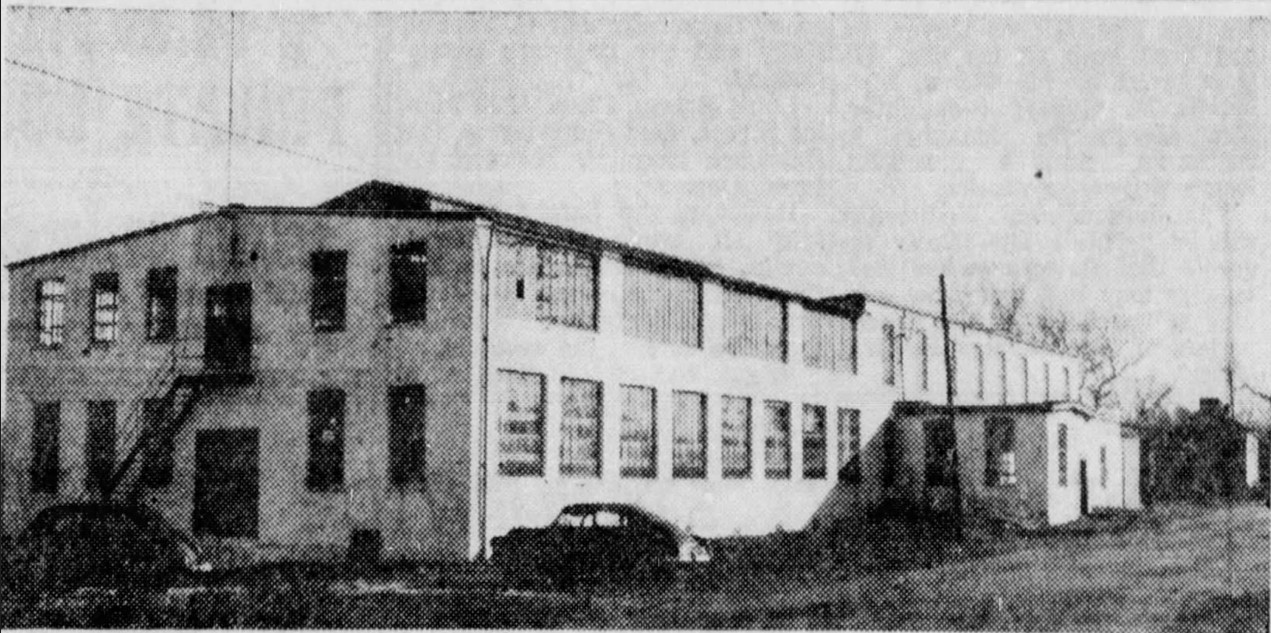
In the last post we looked at the story of the Colonial Era mill which was located directly north of the Hale-Byrnes House, on White Clay Creek just south of Stanton. Originally built by Daniel Byrnes in about 1770, it was rebuilt by William T. Smith just after 1800 and operated until it was destroyed in a fire. I'm not sure of the date on that, but it was sometime between 1844 and 1861 (probably closer to 1844). The mill, the house, and more than 150 acres were owned by prominent lawyer Andrew C. Gray at the time of the mill's destruction, but he soon sold it all to the Farmer's Bank of Delaware.

The mill seat lay dormant for a time, until Jesse Sharpe came along and purchased the property on July 2, 1861. Sharpe was not a random entrant into the story, but was a prominent and wealthy Wilmingtonian and a director of the Farmer's Bank (among other positions with other companies). It's very possible that the financially wise Sharpe saw the potential of the site and specifically its potential need in the near future. This was only a few months after the outbreak of the Civil War, and though most people assumed the war would be quick, Sharpe may have foreseen the need for mill sites and the ramping up of industrial production for the protection of the Union.

If that was the case (and that's only my theory), it probably took longer than he expected to see a return on his investment. It wasn't until June 1864 that Sharpe sold some of the land he had bought, in three separate tracts. They were basically (1) the land bounded by the Hale-Byrnes House on the south, White Clay Creek, the mill race, and the railroad tracks on the north; (2) the mill race itself; and (3) what is (humorously, to me) called "the Dam Ground". These were sold to William Dean, owner of the Dean Woolen Mills farther up White Clay Creek at Newark (off of Paper Mill Road). Dean, who had government contracts for war materials, was looking for an additional site to increase production.

Thursday, July 28, 2022

The Mills of White Clay Creek Landing -- Part 1: The Byrnes Mill

White Clay Creek Landing, showing
the site of Daniels Byrnes' Mill
Although there hasn't yet been a dedicated post about it here on the blog, I think it's fair to say that 
many people are at least somewhat familiar with the Hale-Byrnes House, which sits along White Clay Creek and Stanton Christiana Road. What many don't realize is that there once was a mill associated with it, that sat right along side it. Actually though, there were two mills -- one Colonial Era mill that was associated with the house, then a later mill in the same spot, not connected to the old brick home. And in fact, I'm sure many of you remember that second one, even if you weren't aware at the time of its earlier history.

We don't need to get too much into the (somewhat debated) early history of the Hale-Byrnes House, but from research by Walt Chiquoine it appears likely that the current brick house was built about 1760 by David Finney. In 1773 it was sold to Daniel Byrnes, a miller and prominent Wilmington Quaker. Byrnes moved his family out to what was then known as White Clay Creek Landing, and built a mill about 150 feet north of his new home. Not only did the site have good water power from a race dug across the large bend in White Clay Creek, but it also had another advantage that the other mill seats on the local creeks lacked -- direct access to shipping. At the time, boats could navigate all the way up the Christina River and White Clay Creek to dock directly behind Byrnes' home.

According to reports, Byrnes used his mill for multiple purposes. Besides grinding grain, he also manufactured wire and spun twine or flax thread there. Of course, the most exciting thing to happen during Byrnes' tenure was in early September 1777, when the Continental Army was encamped nearby and George Washington used the house for a meeting with his generals (including Lafayette, who celebrated his 20th birthday at the house). They were of course preparing for an expected confrontation with Gen. Howe and his British troops. Although the Americans were prepared for a battle along Red Clay Creek, the fight would ultimately take place on September 11 in Chadds Ford, at the Battle of Brandywine.

Friday, June 24, 2022

The William Foote House

The William Foote House
There are a few different ways an old house can be situated. It can be prominently displayed along a 
major road. It can be set along a smaller road, or nestled deep within a modern development. Sometimes, it's now nothing more than some ruins in the woods. There's one house though, tucked deep into the Mill Creek Valley, that's not at all visible from the nearest roads. There have probably been times during its over 200 years when the area has been more open, but today, probably the only way you're likely to see it is in the pictures in this post. Its owners have been local families and "out of towners". And it has been owned by some of the poorest people in the area and by one of the richest to reside in the vicinity.

The William Foote House is located on the east side of Mill Creek and Mill Creek Road, surrounded on three sides by the development of Bella Vista, but not too closely surrounded. It currently sits on just under 15 acres of land -- a lot by today's standards, but far less than it used to oversee. The associated property around it went through many changes over the years, with land being acquired and then sold off. Honestly, the early history is a bit confusing, at least as far as determining which tracts contain the land on which the house now sits.

In 1753, William Tate acquired 80 acres of land, which he sold in 1762 to John Watt. Watt bought even more land in the area over time (including 134 acres from Uriah Blue in 1767). In his 1790 will, John Watt wrote, "I give and bequeath to my loving Brother Robert McFerson and my friend John McBath the plantation that is now in the tenure of William Montgomery lying and being in Millcreek hundred[...]". That's great, but there are a few details therein that aren't exactly clear. First of all, I've been unable to determine what the relationship was between Watt and McFerson. If the will is to be taken literally, then perhaps they were step-brothers. McBath (or more commonly, McBeath) and McFerson were definitely connected, as we'll see in a moment.

Tuesday, May 24, 2022

The Many Updates to the Rotheram (Harmony) Mills House Post

NE exterior of the Rotheram House,
showing the 
original gambrel roofline
and window (1971)
I have always viewed this blog, and historical research in general, as an ongoing, continuous endeavor. It's not at all unusual for me to come across new information on an old topic, at which point I'll either just correct or add it to the original post, or maybe write a full follow-up post with the new information. I've done that a few times recently. Sometimes, though, I find so much more stuff that more drastic measures must be taken. Recently I fairly accidently came across something I had in my collection but hadn't realized the significance of. That set me off doing more digging on a topic I had first written about almost nine years ago, and I ended up finding a lot more. I decided the only fair thing to do was to do a massive update to the original post about the Rotheram (or Harmony Mills) House.

I chose this route mainly because of the amount of new information I added, plus the breadth of it. I found new stuff about the early years of the mill, the middle years, and the later years. The real quick version of this post is "Go read (or re-read) the original post." The link's right there. Frankly, you have no excuse not to. At this point the "new" post is probably about twice as long as the original version, and is now much more of a complete story. There are still a few holes to be filled, but most of the story is pretty clear.

However, if you either did not want to re-read the original post or wanted to know what the new information was, here's a brief rundown, in chronological order, not in the order I found it. And since I've already woven the new finds into the story of the house and mills in the original post, I thought I'd just do a quick bullet-point rundown here. Any objections?....No? Good. Here we go:

Tuesday, April 19, 2022

The Crowell Tape Corporation

Crowell Corp.'s Yorklyn warehouse, c.1955
(Courtesy of the Marshall Steam Museum,
the Adelman Collection)
Like, I think, many researchers, my favorite kind of topic is one I initially know very little about. My
favorite kind of question is one I don't know the answer to. That came up recently when I was asked if I knew anything about the Crowell Tape Mill, just south of Yorklyn. Honestly, at the time my only answer was, "Wasn't it that skinny building along the road that burned down in the 60's?" While it turned out that both of those things were correct, as you might imagine there was much more to the story.

The Crowell Tape Mill was what I'd call a second-generation business in New Castle County. They didn't build their facility here, but instead moved into an already existing complex. The company itself didn't even start anywhere near Delaware, but it turns out there was a very logical reason why they moved here. The story all starts in New England, with the company's namesake, Charles H. Crowell.

Crowell was born in Lynn, Massachusetts (just north of Boston) in 1868, and by the late 1890's owned his own company in nearby Rockport. His business made gummed paper -- basically water-activated adhesive paper. Cut into strips it was used as sealing tape for boxes, as pressure-sensitive tape (like scotch tape or packing tape) wouldn't  become widely-used until well into the 20th Century. It was also used for bookbinding. It seems when his first business folded in 1898, Crowell sold it to another firm which kept him on as a manager. They moved the factory to south Boston, but in 1904 it was destroyed in a fire. The company then purchased another struggling firm in New Hampshire, reorganized, and became the Nashua Card, Gummed and Coated Paper Company.

Wednesday, March 30, 2022

The Eastburn Homestead -- Part 2

The Eastburn Homestead today
In the first post about the Eastburn Homestead, we looked at the early years of the Eastburn family in
Mill Creek Hundred, beginning with David Eastburn's purchase of about 150 acres of land near Milltown in 1804. Twelve years later, along with his brother-in-law Abel Jeanes, Eastburn purchased about 200 acres near Pleasant Hill, south of Corner Ketch. The property basically sat on the south side of Paper Mill Road, between Polly Drummond Hill Road and Upper Pike Creek Road. In addition to having a brick house, an inactive grist mill, and various other structures, the property contained several working limestone quarries and lime kilns.

Two years later, in 1818, the men divided their joint property between them nearly in half, with Eastburn taking the northwestern portion and Jeanes the southeastern. Eastburn's part was slightly larger, but Jeanes' section included what's now the Eastburn-Jeanes Lime Kiln District and seemingly all the existing structures at the time. The real question for us is whether the Eastburn House was there when the tract was purchased, and when the house was built. If "probably in the early 1800's" is good enough for you, feel free to skip the next section. If not, read on and be prepared to be frustrated.

As far as I know (and this includes talking to the new current owners), there's nothing definitive in or on the house that gives an exact date. The county lists it as 1810, but the older picture further down in the post had a date attached to it of 1813 (for the house, not the photo). Both of these dates would slightly predate the arrival of the Eastburns, and both (or even an earlier one, which we'll get to later) are certainly plausible. If new information arises to corroborate one of these dates I'll be perfectly willing to accept it, but when I read the evidence, my money (disclosure -- I have very little money), is on a slightly later date.

Friday, March 25, 2022

The Family of David and Elizabeth Eastburn

David Eastburn, Jr.
I'll start this out by saying that this is a post that was never meant to be, but I'm glad it is, as it truly does
have a reason for being. In researching the recent posts about the Eastburn Family Homestead, I found it was important to understand the Eastburn family themselves. So to that end, I decided to write a quick rundown on the first generation of Eastburn children in MCH, the offspring of David and Elizabeth Eastburn. Have you ever tried to write a "quick rundown" on 14 people? In case you haven't, I'll tell you it doesn't work, especially when the people are as well documented as the Eastburns. And so...this post.

The Eastburns are a remarkable group for several reasons, but the most important one for us is the impact they had on the area. Although, as you would expect with so many children, some of them moved away, many remained within a short distance of the home farm. This would have been especially important because David Eastburn, Sr. died in June 1824, when the oldest child was 22 years old and the youngest only 6 days old. Elizabeth Jeanes Eastburn (who never remarried) was certainly a very strong woman.

Another remarkable thing about that first generation of MCH Eastburns was their health. The child mortality rate in the US in 1815 was about 46%. That means that 46% of children born then did not make it to their fifth birthday. (When people long for "The Good Old Days", just remember facts like that.) The Eastburns, however, went fourteen for fourteen. All the children survived childhood, and most lived into what we would consider old age today. I've never seen anything that mentions it, but I strongly feel that the home of the widowed Elizabeth was always a busy place, with family members constantly visiting. The Eastburns always seemed like a strong, close family. 

Tuesday, March 22, 2022

The Eastburn Homestead -- Part 1

The Eastburn Homestead
There have certainly been a number of prominent families in Mill Creek Hundred over the past several hundred years, but few have had quite the reach and staying power to match the Eastburns. We've come across the Eastburns many times before in the blog, spanning several generations of the family and focusing on sites all over the hundred. However, one site that's only been mentioned in passing and never fully investigated here is the one that would have been the most dear to the family -- the original Eastburn Homestead near Pleasant Hill, south of Corner Ketch. Although the family was large and by necessity spread out, this home remained an important family base for nearly a century.

One catch, though, is that this wasn't really the "original" Eastburn home. It wasn't even their first home in Mill Creek Hundred. There were several purchases prior to the move to Pleasant Hill. When I started finding and trying make sense of the deeds, my first reaction was just to give up and go get a drink instead (although to be fair, that's my first reaction to a lot of things these days). However, after taking a bit of time to sort them all out I think I now basically understand what happened, even if some of the details still elude me. What I can tell you for sure about the family is that Quakers David Eastburn and Elizabeth Jeanes hailed from Bucks County, Pennsylvania, and were married at the Gwynedd Meeting in Montgomery County in December 1801.

In December 1804, David Eastburn bought at auction two lots in Mill Creek Hundred, totaling about 150 acres. These had formerly been the lands of Thomas Springer and were located nowhere near Pleasant Hill and the area the Eastburn clan would soon make their own. This farm was at Milltown, and I believe sat on the west side of Mill Creek, encompassing what would much later become the Lindell Farm. It did not include the Reynolds-Lindell House or the mill, which were then owned by Andrew Reynolds. The tract does come west from Mill Creek and share borders with Reynolds, Rev. William McKennan, John Ball, and the heirs of Simon Paulson, and also excludes a strip for Reynolds' mill race. Beyond that I can't make much sense of the exact metes and bounds, but if anyone wants to take a crack at it I'll be happy to send you the deed.