 |
| Mt. Pleasant School, 1933 |
Friday, December 3, 2010
Mt. Pleasant and Union Schools

Tuesday, November 30, 2010
Fell Spice Mill
So far on this site, we've looked at a number of different types of mills -- grist mills, saw mills, woolen mills, and iron mills, just to name a few. But there is one type that we haven't seen yet, and for a very good reason. Not only was it unique in the Red Clay Valley or Mill Creek Hundred, it was the only one of its kind in the entire state! The Fell Spice Mill at Faulkland (Faulkland Road and Red Clay Creek) was, for a time, a very successful enterprise, but one that was ultimately doomed by a series of misfortunes.
 |
| Fell Spice Mill, 1873 |
This is one of those posts where it's challenging to even figure out where to start, because there's probably enough history in the Faulkland area for about a half dozen posts or more. The location originally was the site of Oliver Evans' (who deserves a whole book to himself) innovative grist mill, then was owned by William Foulk (who lent his name to the area). Foulk sold the property to the Fells, who operated the world-renowned spice mill for most of the 19th century. Under the Fells, who were quite an interesting family in their own right and were closely entwined with the neighboring Brandywine Springs enterprises, Faulkland grew to be a small community, one that is now listed on the National Register as the Fells Lane Historic District. Even within the district, there are several houses that would be worthy of their own posts. This time, though, we'll focus on the centerpiece of the milling community, the Spice Mill itself.
Tuesday, November 23, 2010
Stanton Friends Meeting House
To anyone at all familiar with the history of New Castle County, it should come as no surprise that there are several Friends (Quaker) Meeting Houses in Mill Creek Hundred. And to anyone familiar with the area today, it should be no surprise that they are not as influential or as (proportionally) attended as they once were. Of the three meeting houses in the hundred, the one that best reflects this change in demographics is the Stanton Meeting House. And not to give away the ending, but it's also the only one of the three that is no longer a functioning meeting house. However, we are fortunate that the building is still here, even if it's obscured enough that I'm sure very few people driving by have any idea when and why it was built.
What would become the Stanton Meeting can trace its lineage back to 1772, when the Wilmington Monthly Meeting granted locals' request, and allowed them to hold an "indulged meeting" (one for worship only -- no business is conducted, and it is under the supervision of a monthly meeting). However, at first this meeting was not conducted in Stanton, but at Hannah Lewden's house in Christiana. Very quickly, though, the meetings began alternating between the Lewden's house and a location in Stanton. I can't find anything that states definitively where these first meetings were held in Stanton, but a very good guess would be the home of Daniel Byrnes, who moved to the area the same year. Byrnes, who resided in what's now known as the Hale-Byrnes House just south of Stanton, was at the time studying to become a Quaker minister, and would become one in 1784.
 |
| Stanton Friends Meeting House, 1936 |
What would become the Stanton Meeting can trace its lineage back to 1772, when the Wilmington Monthly Meeting granted locals' request, and allowed them to hold an "indulged meeting" (one for worship only -- no business is conducted, and it is under the supervision of a monthly meeting). However, at first this meeting was not conducted in Stanton, but at Hannah Lewden's house in Christiana. Very quickly, though, the meetings began alternating between the Lewden's house and a location in Stanton. I can't find anything that states definitively where these first meetings were held in Stanton, but a very good guess would be the home of Daniel Byrnes, who moved to the area the same year. Byrnes, who resided in what's now known as the Hale-Byrnes House just south of Stanton, was at the time studying to become a Quaker minister, and would become one in 1784.
Friday, November 19, 2010
Thomas Justis House
 |
| Thomas Justis House |
Thursday, November 18, 2010
Mendenhall House and Mills
 |
| Mendenhall House (center) and Mills, c1895 |
After operations ceased at these mills, unless they were repurposed like Caleb Harlan's old mill, there was usually no reason to keep them around. They were generally either torn down more or less immediately so the building material could be reused, or they were abandoned and left to fall down on their own. Very often, by the early-to-mid 20th Century all that was left was the nearby miller's house and maybe a few foundations. This was exactly the case for the Mendenhall House and mills along Mill Creek, at the intersection of Mill Creek Road and (go figure) Mendenhall Mill Road. In this case, we're lucky enough that we happen to have some photographs of the area while (or shortly after) it was in operation, and the mill remained long enough to be photo'd and studied long after it's mothballing.
Monday, November 15, 2010
The Early 19th Century Rebuilding of Mill Creek Hundred
It's possible that if you've read a few of the posts on this site, specifically those pertaining to historic houses, you've noticed a trend or theme regarding the age and construction of many of these homes. In particular, you may have noticed that a number of these houses, (A) were built roughly between 1800 and 1825, and (B) were stone or brick structures that replaced (or expanded) earlier log or frame ones. If you did notice this (and even if you didn't, it's OK, you can say you did. I won't tell), it wasn't your imagination -- this was a real trend at the time in this area.
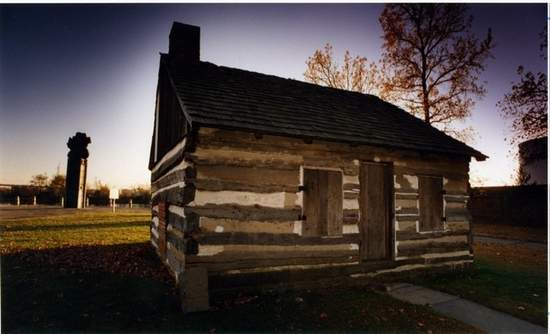 |
| Log House common in 18th Century MCH |
Sunday, November 7, 2010
Robert Kirkwood -- Revolutionary War Hero
 |
| Delaware Regiment at the Battle of Long Island |
As far as the topics of these posts go, most times I'll plan them out beforehand and then go research them. Once in a while, though, something will pop up in a bit of serendipity and I'll know that it has to be my next subject. Such was the case with this one. After finishing the Judge Morris Estate posts, and completely unrelated to them, I happened to come across something whose timing left me no choice but to write up this post. As a result, around this somber anniversary, we'll take a look at arguably Mill Creek Hundred's greatest and most decorated war hero, Robert Kirkwood [if you know of a challenger for the title, let me know]. He's one native son whose story really should be as well known as his name.
Tuesday, November 2, 2010
Judge Morris Estate -- Part 2

Subscribe to:
Posts (Atom)